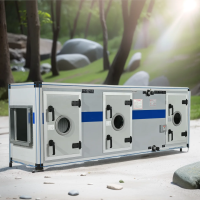
Installing a horizontal concealed fan coil unit (FCU) involves more than placing a box above the ceiling. You need to optimize airflow, ensure efficient drainage, and maintain service access. In hydronic HVAC systems, especially chilled water-based ones, poor installation often leads to noise, airflow issues, condensation, or system inefficiency.
This article walks you through the key installation points for horizontal concealed FCUs, including ceiling space planning, ductwork layout, piping configuration, and common installation pitfalls. Horizontal concealed fan coil unit
Horizontal concealed FCUs deliver quiet and efficient performance when properly installed in ceiling spaces. But because they stay hidden from sight, many installers only discover errors after the unit starts leaking, vibrating, or underperforming.
A well-installed FCU:
Directs return and supply air correctly
Drains condensate efficiently
Maintains stable thermal performance
Allows easy access for maintenance
Reduces long-term operational cost
Before installing the FCU, measure the available ceiling void accurately. Most horizontal concealed FCUs need:
At least 250–300mm of vertical space to accommodate the unit (usually 230–270mm high) and duct connections
Access panels for coil cleaning and filter maintenance
Duct sizes based on airflow and static pressure of the unit
Acoustic insulation above sound-sensitive areas like bedrooms
Keep the supply duct short and straight to minimize pressure loss. Use insulated flexible ducts where needed to prevent vibration and reduce thermal loss.
Drainage plays a critical role in chilled water FCU installation. Follow these best practices:
Level the unit or give it a slight slope toward the drain outlet
Use dual drain pans if the unit includes them
Insulate the entire drain pipe to prevent sweating
Install a drain pump if gravity drainage isn't possible
Add a P-trap to block odor or backflow
Include a float switch for overflow protection, especially in server rooms or offices
For chilled water piping:
Choose DN20 or DN25 flexible hoses for connections
Follow the correct water inlet and outlet direction
Install balancing valves and control valves properly
You should avoid these frequent errors:
Not reserving enough ceiling space
Routing drain pipes uphill
Using undersized ducting
Skipping access panels for filter maintenance
Failing to insulate chilled water pipes
Forgetting to install air-bleed valves
These mistakes can compromise system efficiency and cause future service problems.
When you install horizontal concealed FCUs correctly, they deliver flexible and quiet performance in a clean, unobtrusive setup. But if you ignore the fundamentals—like ceiling planning, duct alignment, drainage, and pipe insulation—small errors can cause big problems.
At YESNCER, we support engineers and installers by offering installation drawings, static pressure options, and technical assistance. Contact us to request CAD layouts, control integration tips, or accessory recommendations for your next chilled water FCU project.